Margarita Suliaeva
Artist · XR author
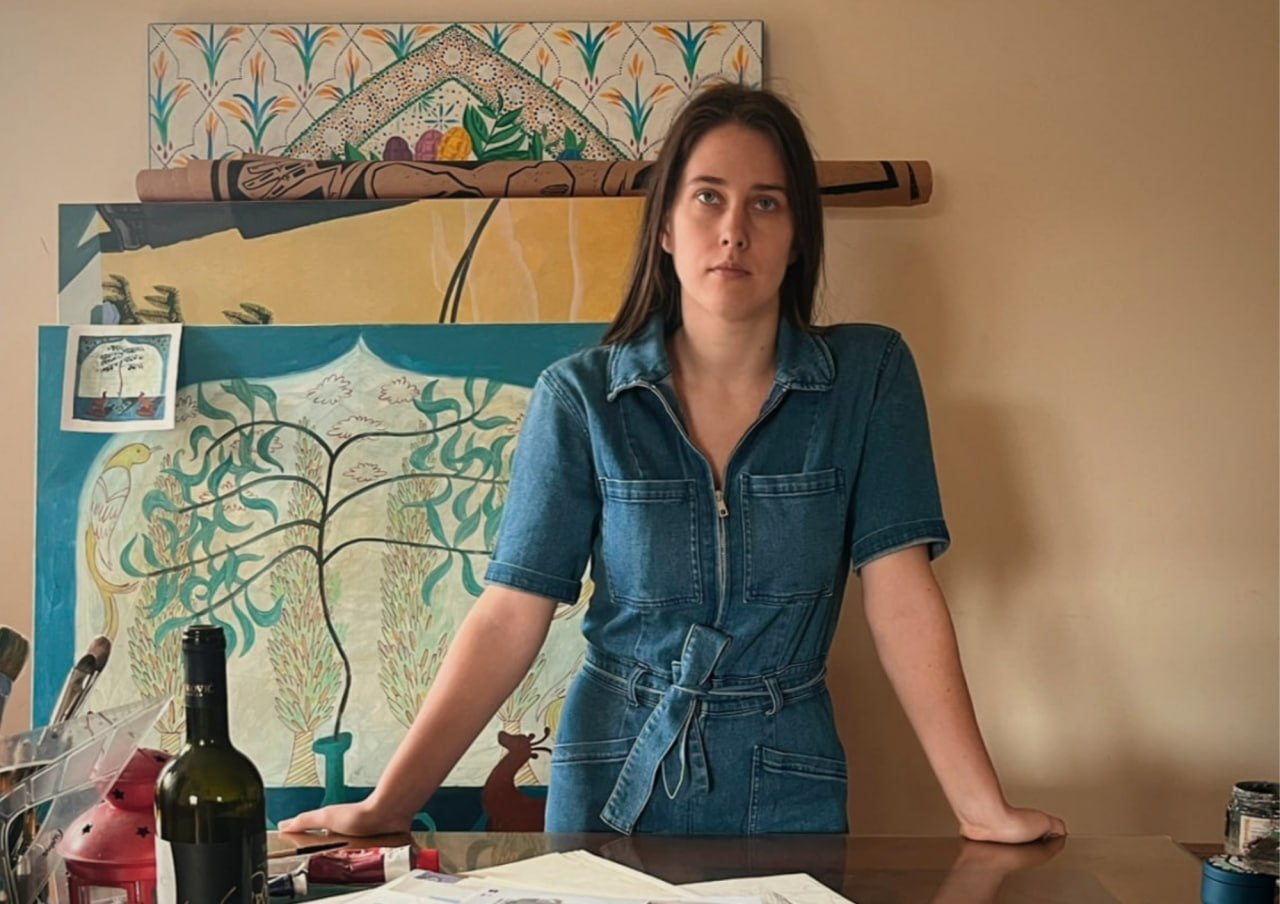
Margarita Suliaeva (b. 1996, Moscow) is an artist working with figurative painting, VR and AR. In 2021 she graduated with honors from the Surikov Moscow State Academic Art Institute. In 2018 she was awarded the medal of the Russian Academy of Arts.
Since 2019 she has taken part in international exhibitions. In her work the artist turns to mythology, folklore, medieval bestiaries and archival imagery, exploring how ancient symbols continue to live inside contemporary culture. Her practice is built around contradictions she does not seek to resolve but to make visible: between beauty and threat, the ancient and the current, the imagined and the real. Decorative expressiveness and saturated colour in her painting become not ornament but a way to physically sense the inner tension of the image.
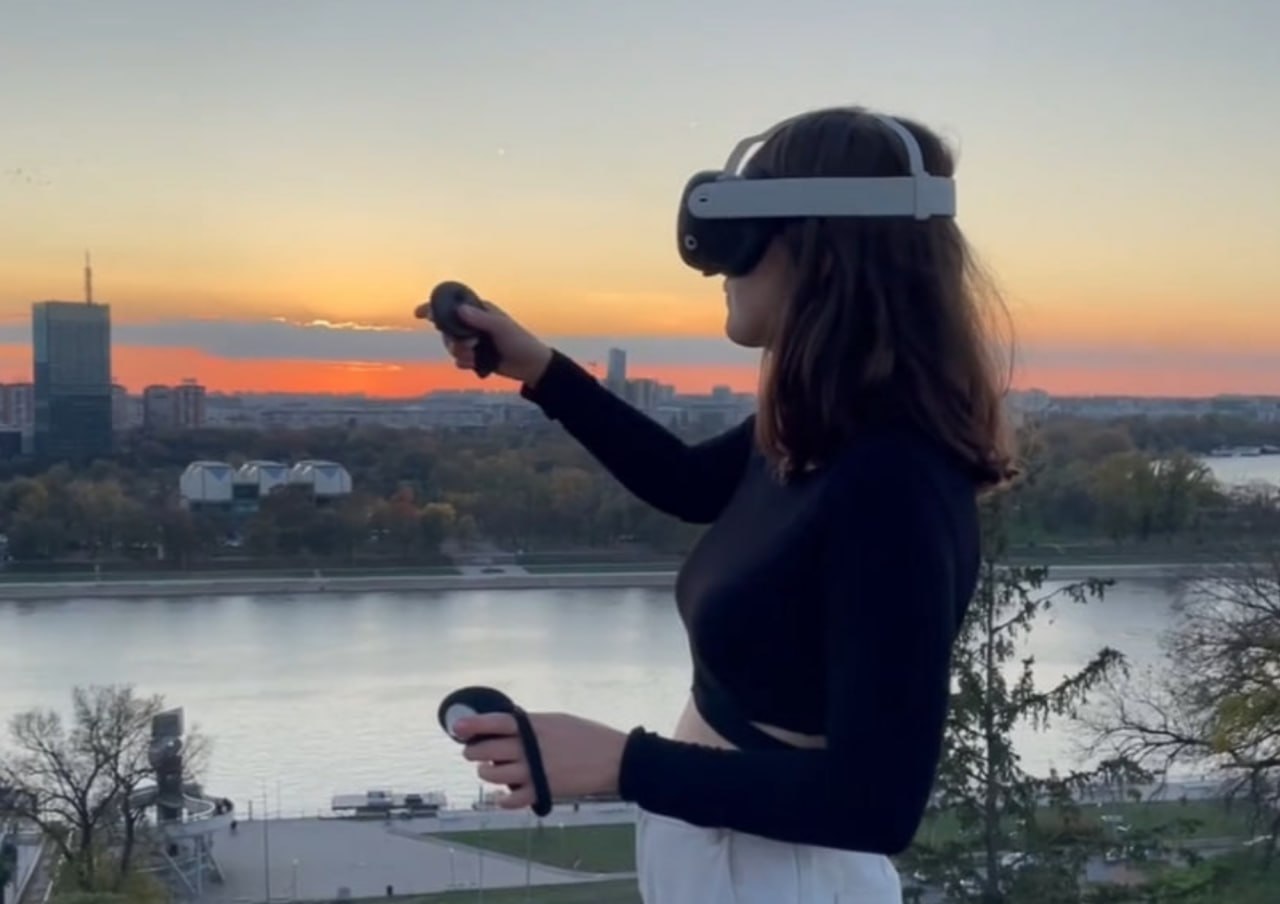
Since 2022 Margarita has lived and worked in Serbia. Here she develops a practice at the intersection of painting and immersive technologies, combining a traditional artistic language with VR/AR, spatial scenes and interactive digital layers. Part of her VR practice is tied to urban space: the artist paints in a headset on the streets, turning architecture, light, movement and the very rhythm of the city into a continuation of the painterly gesture.
Artist Statement
I am an artist and XR author. Acrylic on canvas, virtual reality, augmented reality — different surfaces, the same obsession.
I am drawn to duality. Not the comfortable kind where opposites complete each other, but the kind where everything unfolds through conflict — where the beautiful turns out to be dangerous, the ancient suddenly becomes frighteningly current, and the imagined and the real occupy one space at once. I do not try to resolve these contradictions. I try to make them visible.
Colour is the foundation of everything I do. I use it almost excessively — saturated, almost aggressive — because I want the contradiction to be felt by the body before the mind has time to make sense of it. Brightness is not optimism. It is pressure.
Virtual reality changed my understanding of drawing. In VR a line exists in three dimensions — it has weight, direction, presence. It can stand in a room. It can follow a person down the street. For me this is not a technical fact but a philosophical one: the imagined has always been real — we simply lacked the tools to place it where it belongs.
I turn to mythology, folklore and history not out of nostalgia, but because ancient images that have reached us across centuries hold a particular density of meaning. Encoded within them are fears, hopes and the experience of existence. I am interested in what survives, what gets buried, and what refuses to stay buried.